
Solomijẹ
A word I made up about a very real feeling of sadness and loss.

Long time no brood, aye?
[P.S. This was supposed to come on Saturday but I was really busy and forgot to schedule it. Sarry Sarry.]
The English Language is a sorely limited language, and if you talk about your feelings enough, you kind of figure that out—how there are some feelings that don’t have words to describe them. You end up saying things like ‘how do I put this’ or ‘I don’t have the words’. Well, another language might.
Say you’re standing in a crowd at the side of the road on a rainy day, next to a large puddle of water. A small car speeds past, splashing water on the bystanders, but luckily for you, it swerves a metre before it gets to you and you’re spared. However a number of people next to you are drenched in what can only be described as the sins of the city. You feel bad for them, but simultaneously, even if for just a moment, you also feel a tinge of relief, joy… maybe pleasure, even, at the fact that it happened to them and not you.
Schadenfreude - /ˈʃɑːdənfrɔɪdə/ - a German word that literally translates to "harm-joy" is used to describe ‘the embarrassing reaction of relief we feel when something bad happens to someone else instead of to us’1. You’re not happy that the bad thing happened to them, but you do feel some satisfaction that a bad thing that could’ve happened to you, happened to not you.
Another favourite of mine is a made up Russian word I discovered last year that represents an oft misinterpreted feeling—yes all words are made up but this one is recognised by Russians and only exists because of errors stacked on top of one another through the years. If you’ve ever thought about someone you’ve been romantically involved with in the past and have mixed feelings about whether you’re still in love with them or just miss them, you might be feeling Razbliuto.
Razbliuto - ros-blee-OO-toe - a feeling a person has for someone he or she once loved but no longer feels the same way about. You can read more about how it isn’t a real word here2.
Honorable mention saudade - /saʊˈdɑːdə/.
Anyway, this piece is not a grammar lesson. Sometime last year, I realised I had been feeling some type of way, and I wanted a word to just collapse it all into. Here’s some context.
I live in Nigeria, and I think it’s safe to say we’re experiencing many a crises, one of them being emigration. Some time in 2023/24 I saw a group of graduate underclassmen from my alma mater having a hangout. They were all from the same department and had managed to sustain a friend group about a year or two after graduation. I began to wonder, why don’t I have a friend group like that? The answer hit me soon after when I came across a photo from a beach hangout Circa 2021, about a month after our final exams. In that photo are fifteen of us. You could call us friends. As at when I stumbled across that photo again two years after, there were only five or six of us left in the country, as I’d just said goodbye to yet another one of my closest friends.
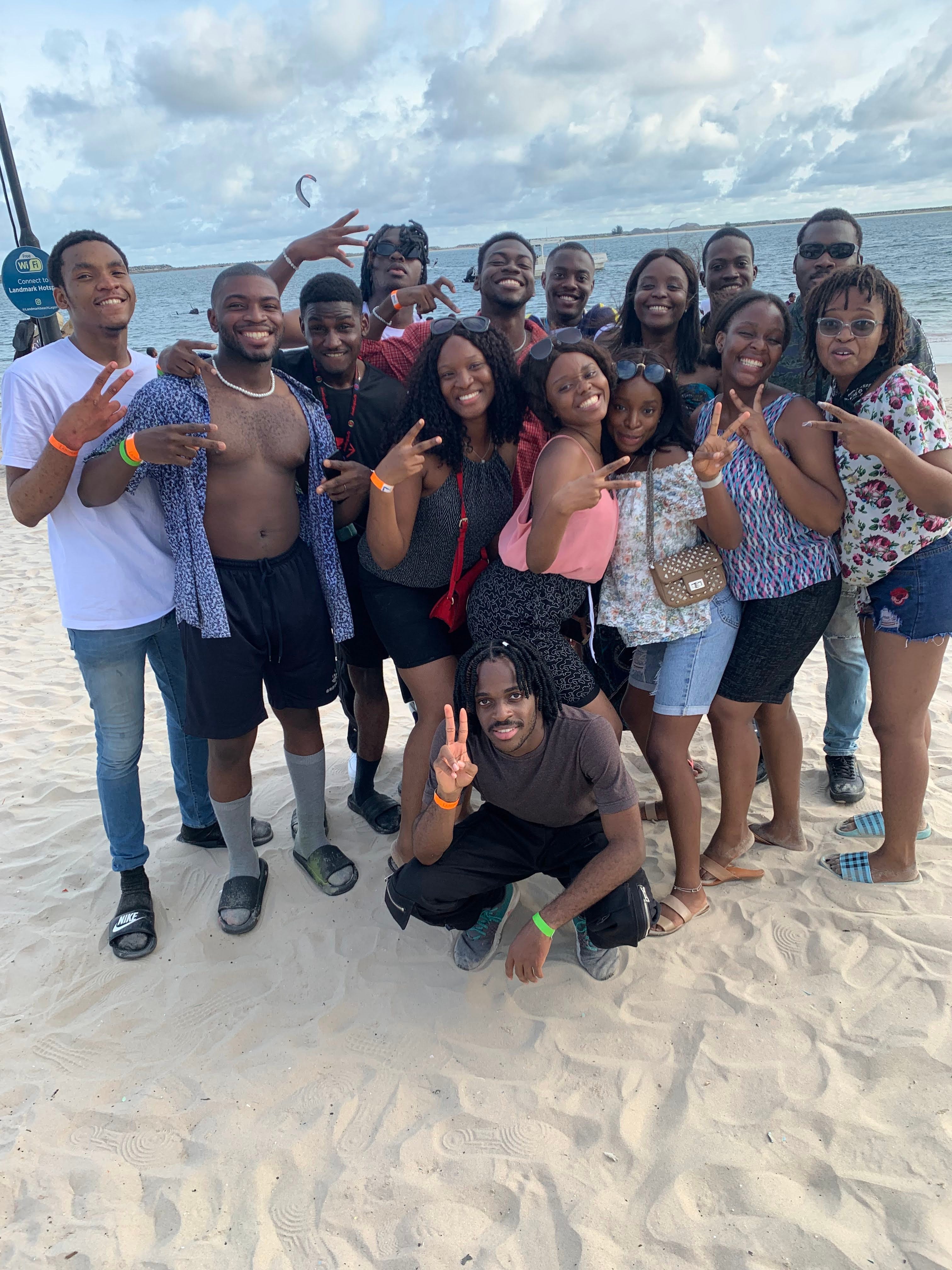
This particular friend, is one of those people who you think to yourself, “this guy needs to get out of here man,” he’s not meant for this side of the world—a sentiment many people seem to share about me. After seeing Good Will Hunting last year, I feel like it was telling me something too.
Anyway, he’s over a year into his masters+Ph.D programme in robotics and stuff and dating a Chinese post graduate student. They’re so adorable, and there are fewer people happy for him than I am.
However, I relish the ability to experience two opposing emotions towards a certain subject—Emotional Ambivalence, you could call it. As happy as I am for my friend achieving a great escape, I am sad for myself. Not because I feel left behind, but because I can’t swing by his house anymore on the way from the Lagos Island. We can’t go to the cinema and complain about the latest Marvel movie while still buying a ticket to see it. The ability to see each other is indefinitely reduced to a digital interface. I am grateful we spent time together those years before he left. I can’t say the same for many of my other friends.
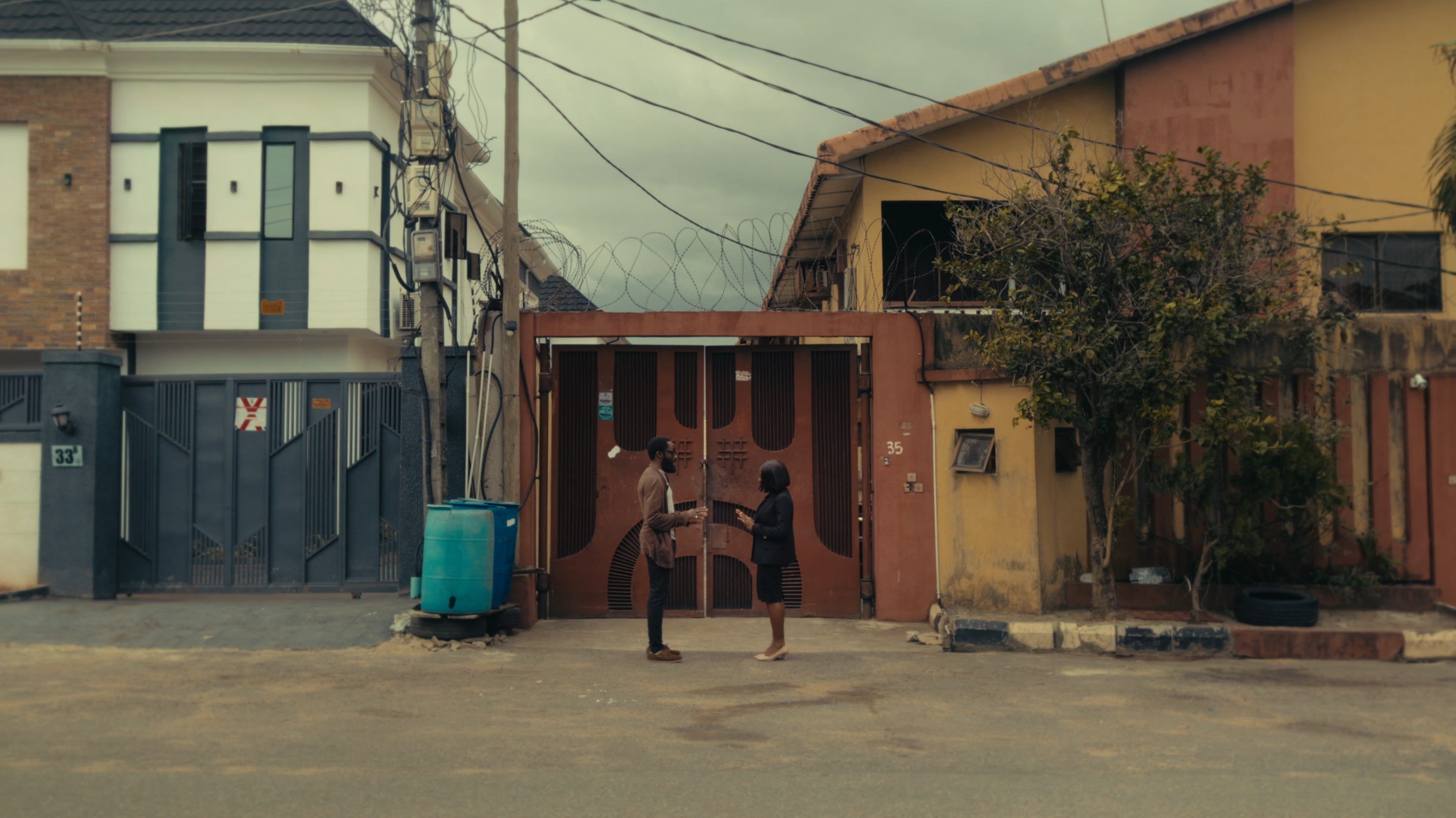
France, Canada, USA, England, Ireland, etc. These are some of the nations that have gained what I have lost, and I think at some point, my cup ran over and I began scrambling for an outlet for what I didn’t know I was feeling. This led me to make And Then There Was One (2025). Watch the full two minute short film for free here. You can watch the teaser trailer below though.
It allowed me to scream the way I felt into a form of artistic expression. Script first, then film. And of course, everyone I shared it with could relate in some way. However, it wasn’t enough—and I’m not only saying that because I’m already making like three lengthier films with emigration related subthemes/subplots. It was still another roundabout way to say how I was feeling at the time. So I decided to make a word.
For all the shit we give AI, it’ll always be a pretty good brainstorming tool. My word is;
Solomijẹ (noun)
Pronunciation: /soh-loh-MEE-jeh/
Definition
A bittersweet emotion: to feel genuine happiness for another’s joy, success, or new beginning, while at the same time carrying a lingering ache for yourself — born not of envy or self-pity, but of yearning for what has been lost, is fading, or may never return.
Usage
• “When my sister left for New York, I felt Solomijẹ—joy for her new life, but longing for the dinners we’ll never share again.”
• “It is Solomijẹ when you cheer at a friend’s wedding, even as you grieve the closeness you once had.”
Etymology
From solace (comfort, consolation) + Yoruba omijẹ (tears). A linguistic sibling to schadenfreude and saudade, but uniquely shaded by Yoruba sensibility.
And when I saw what I had created, I thought that it was good, and so, I rested… for a while.
The 17th of January, 2026, like every year, is my mother’s birthday. However, this year it marks the year I discovered a remedy for Solomijẹ. It’s the day that my oldest friend—friend I’ve had the longest, not friend with the highest age—left Nigeria to go start life. At the airport he kept asking me, jokingly, why I wasn’t crying. I only just realised why a week later. It’s because I didn’t feel like our friendship owed me anything. We spent as much time as we could, every chance we got, and even moreso in the months leading up to his… escape.
And yeah, we’ll see when we see, but I can fully just be happy he’s gone, and I’m really happy about it. He won’t be the last, though, so I brace myself for another batch of exits in a few months. If you’re my friend hang out with me, abeg, make I no dey cry for night.
Kushner, Harold S. (2004). “There is a German psychological term, Schadenfreude“. When Bad Things Happen to Good People. Anchor Books. p. 44. ISBN 978-1-4000-3472-7.
languagehat (2005). “RAZBLIUTO? NYET!”
I love this piece so much Bayo, I will be adding this word to my vocabulary. So beautiful yet so sad. This is the reality of things and I have been sad for a bit about it, my friends leaving me makes me so sad.
I love this. And I feel this. Nigeria has taken so much from us, but again, so has growth. I see now why you said you were happy Big Chops and I are still close.